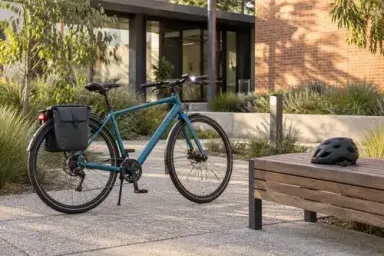
A bicycle commute trial lets you assess one work journey before making it part of your routine. The aim is to find out how the route, bicycle, belongings and workplace arrangements fit together. A useful trial can reveal a practical option, or show that a particular journey needs a different plan.
Keep the first test modest. You are evaluating an ordinary day, not setting a speed record or promising to cycle every week. Choose a journey you can prepare for, resolve the important questions first and leave yourself room to decide what comes next.
If your starting question is 'Should I sell my motorbike and change how I get around?', separate that decision from the cycling trial. A bicycle may suit some trips without replacing every use of a motorcycle. Test the actual work journey before building a wider transport plan around an expectation you have not checked.
Choose a workday you can actually evaluate
Look beyond the distance between home and work. What do you need to do before leaving, and what happens after you arrive? An otherwise straightforward journey may fall on a day with an early appointment, a bulky delivery to carry or an evening commitment somewhere else.
Choose a day whose requirements you understand. Write down when you need to be ready for work, what you must bring and any duties after finishing. This gives the trial a defined purpose. You can then judge whether it fits that day rather than comparing it with an imaginary version of your week.
Leave complicated days out of the first experiment. That is a choice about the scope of the trial, not a conclusion that they can never work. A later test can consider different starting times, a different destination or extra luggage once you have answered the basic questions.
Also decide what would make you postpone the test. Unresolved bicycle condition, a route you are not comfortable attempting or changed work obligations are reasons to reconsider. There is no benefit in forcing a first ride simply because a date has been written in a calendar.
Review both directions of the route
Examine a possible cycling route independently of the route you use in a motor vehicle. A familiar drive does not establish that every section is appropriate for your bicycle journey. Check current local information and identify the parts that need more investigation before setting out.
Look at the return as a separate journey. Access arrangements, daylight and your destination after work may differ from the morning. If the plan includes an unfamiliar section, decide how you will clarify it rather than relying on memory from a different mode of transport.
The idea of a rehearsal is also covered in BikeTips' firsthand commuting guide. For your own trial, use that idea to learn about the particular route you are considering. A general guide cannot confirm that a local road, crossing or path is suitable on the day you travel.
You might mark questions such as where a route joins another path, whether a destination entrance is accessible by bicycle, or which section you would prefer to avoid. Resolve those questions through current local information or appropriate advice before treating the route as ready.
Begin with a suitable, serviceable bicycle
Start by considering the bicycle you intend to use. Is it suitable for you and the journey, and is its condition understood? An existing bicycle that has been stored for a long time deserves attention before it becomes part of a workday plan. A tidy appearance alone does not answer those questions.
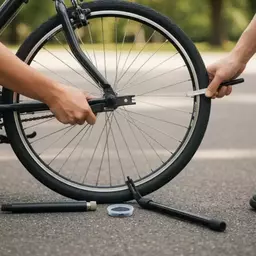
If you are unsure about condition or setup, seek a competent assessment rather than attempting unfamiliar repairs for the sake of the trial. Describe the proposed journey and what you expect to carry. This gives the person advising you useful context without requiring you to diagnose a mechanical issue.
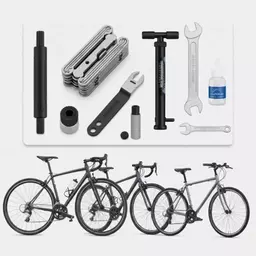
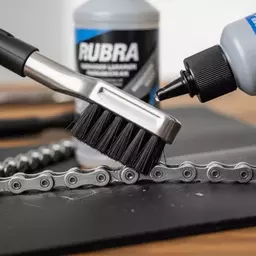
Our introduction to basic bicycle maintenance offers background reading on looking after a bicycle. Use advice appropriate to the actual bicycle and your skills. A commuting experiment should not depend on a repair you have not understood or checked.
Riding confidence also matters when deciding which journey to attempt. If you are returning after a long break, review bicycle riding basics and consider suitable instruction. Previous motorcycle experience should not be treated as proof that an unfamiliar bicycle setup or route will feel straightforward.
Check the workplace end of the journey
Arrival at the building is only part of the commute. Find out where a bicycle may be parked, how that area is accessed and whether you need permission or a key. Ask about the actual workplace arrangements rather than assuming that a rack shown in an old photograph is available to you.
Then consider the steps between parking and being ready to work. You may need to put away riding items, change clothes or move to another part of the site. Include those steps when reviewing timing. A route estimate that ends at the front gate does not describe the whole morning.
Ask practical questions before the trial:
- Where can the bicycle be parked during your working hours?
- How do you enter and leave that area?
- Where can riding belongings be stored, if permitted?
- What clothing or preparation does the workday require?
- Who can clarify an access problem if arrangements change?
Keep the answers specific to your workplace. A colleague's arrangement at another office can provide ideas, but it is not confirmation of what your site permits. If the important access question remains unanswered, resolve it before choosing that day for a trial.
Pack for that day's actual tasks
Lay out the belongings you need for the selected day. Include work items, clothing and anything required immediately after work. This makes the carrying problem concrete. A plan based on an empty bag can look quite different when the day's actual contents are added.
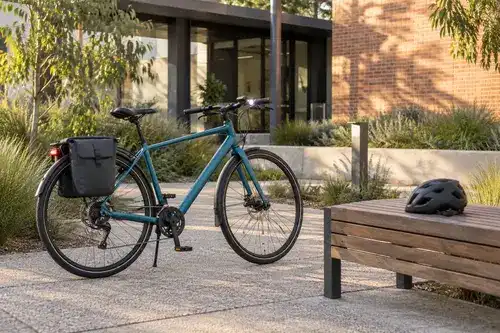
Consider how those items will be carried with the bicycle you are using. If a rack, pannier or other accessory is involved, check compatibility and the manufacturer's instructions. Do not assume that equipment suited to another bicycle, or luggage used on a motorcycle, will attach appropriately to this setup.
Our commuter accessory guide can help you organise questions about equipment. It should be a prompt to consider your needs, rather than a requirement to buy every item mentioned. Lights, a suitable helmet, a lock and luggage arrangements deserve attention before optional additions.
Prepare the items in advance and identify anything that is missing or unresolved. Keep the first trial's packing list short enough to review easily. If the workday requires a load you cannot suitably carry, select another day or another transport arrangement instead of improvising at departure.
Rehearse without an appointment deadline
A rehearsal can separate learning the journey from needing to arrive for work at a fixed time. Choose appropriate conditions and a route you are ready to attempt. Allow yourself to stop the experiment or turn back if it does not suit you. Completing the planned distance is not the only useful outcome.
Pay attention to the practical sequence: leaving home, navigating the chosen route, reaching the workplace access point and returning. Note questions that appear along the way. Do not operate a phone or write notes while riding; review the details when you have stopped appropriately.
Tern's bike commuting guide provides broader reading on preparing for workday cycling. The useful question for this trial is narrower: which arrangements still need confirming for your bicycle, route and workplace before you rely on them?
Do not turn one rehearsal time into a guaranteed travel time. Conditions on another day may differ. Use the experience to identify the steps involved and decide how much flexibility you need, rather than to make a promise based on a single run.
Plan the return and a practical alternative
Before the workday trial, decide how you intend to get home and what you will do if the plan changes. An unexpected commitment, unsuitable conditions or a bicycle problem can affect the return. Consider those possibilities while you still have time to make arrangements.
If another transport service might form part of the plan, check its current rules directly. Do not assume a bicycle can be carried on every service or at every time. A combined journey is useful only when the specific arrangements have been understood and suit your circumstances.
Also consider the bicycle itself if you return another way. Confirm whether it can remain at the workplace and how it would later be retrieved. Leaving that question until the end of the day can turn an otherwise manageable change of plan into an avoidable access problem.
Review a fictional first trial
Imagine an office worker choosing a day with no off-site meetings. Their bicycle has been assessed, workplace parking is confirmed and the bag contains only that day's essentials. A rehearsal has already identified the entrance they should use. The trial now has a clear scope rather than an open-ended promise to change everything.
After the workday, they write three observations. The route description needs a clearer note at one junction. Their work shoes take more bag space than expected. The time between parking and reaching the desk needs to be included in the next plan. Each observation points to a specific question or adjustment.
They do not conclude that cycling will suit every day. A later workday includes equipment that needs a different transport arrangement. They keep that separate from the successful parts of the first test. This fictional example shows how a trial can inform a routine without turning a single experience into a universal answer.
Decide what to change before repeating it
Review the trial by separating observations from decisions. 'The bag was awkward' is an observation. 'Ask about a compatible carrying option' is a possible next action. 'I should buy a different bicycle immediately' is a much larger conclusion that the observation alone may not justify.
Some questions can be resolved through information or a modest change of plan. Others may show that the journey does not currently suit you. Either outcome is useful if it is clear. You can choose another route to investigate, try a different day or retain another mode of travel for that trip.
Keep wider vehicle decisions separate until you have considered all the journeys involved. A bicycle commute trial answers questions about a particular workday. It does not automatically answer how you will manage every errand, passenger, load or distant destination in your life.
Let the routine earn its place
A useful bicycle commute trial is specific enough to evaluate and flexible enough to revise. It brings together the route, bicycle condition, workplace access and belongings, then checks how those parts work on a real day.
Start with one suitable journey and an honest review. Repeat what fits, resolve what remains uncertain and keep other travel options where they serve a purpose. A workable cycling routine grows from those practical decisions, one considered trip at a time.